Tuesday, September 19, 2023

Key Concepts - Artificial Intelligence

Artificial Intelligence (AI) refers to machines that mimic human cognitive functions like reasoning, decision-making, and problem-solving.

AI is built on three pillars:

  • Learning: The ability to adapt to new situations (generalized learning).
  • Reasoning: The ability to choose the best course of action (reasoning ability).
  • Problem-solving: The ability to use information to find solutions (problem-solving).


Methods:

  • Machine Learning: Trains algorithms to learn from data and improve performance.
  • Rule-based systems: Programs machines with specific rules and logic to perform tasks.
  • Other techniques: Symbolic AI, logic programming, knowledge representation.

Types of AI:

  • Narrow AI (Weak AI): excels at specific tasks (e.g., playing chess).
  • Artificial General Intelligence (Strong AI): (hypothetical) replicates human-level intelligence and consciousness.

Machine Learning (ML): A technique for achieving AI through algorithms that learn from data and experience.

Deep Learning: A subset of ML inspired by the structure and function of the human brain.


d8199244af47581849694ac771734a6cfd570e82-1291x749.png.webp

Image source and in-depth reading at - https://www.stratascratch.com/blog/data-science-vs-machine-learning-vs-deep-learning-the-difference/ 

Wednesday, September 6, 2023

Breaking Web 3

 Web3 promises a future where the internet isn't controlled by a few tech giants. Here's the gist:

  • Decentralized Power: No more big brother! Web3 distributes power among users, with blockchain tech (think Bitcoin's underlying system) keeping things secure and transparent. Think of it as a peer-to-peer internet, not a centralized one.
  • Own Your Data & Assets: Imagine a world where you control your social media posts or in-game items, not the platforms themselves. Web3 empowers users with ownership of their digital footprint. Think NFTs (Non-Fungible Tokens) representing unique digital items you can truly own.
  • Community-Driven Web: Forget top-down control. Web3 lets users participate in shaping online platforms, fostering a more democratic web. Think DAOs (Decentralized Autonomous Organizations) where communities collectively manage projects and make decisions.

Key Players to Watch:

  • Blockchain Networks: Ethereum, Solana, Polkadot - These provide the foundation for building decentralized applications (dApps) that power Web3.
  • Cryptocurrency Exchanges: Coinbase, Binance - These platforms allow users to buy, sell, and trade cryptocurrencies, the fuel for Web3 transactions.
  • Metaverse Platforms: Decentraland, The Sandbox - These virtual worlds offer glimpses into a future internet where users can interact, play, and own digital assets.

Web3 is still young, but it has the potential to reshape the internet landscape. Buckle up for a future where users are in charge and innovation thrives in a more open and collaborative environment!

Wednesday, July 12, 2023

Breaking - Security as a Service


Security as a Service: Peace of Mind Delivered

Feeling overwhelmed by the ever-changing cybersecurity landscape? Security as a Service (SecaaS) can be your knight in shining armor. Think of it as having a dedicated security team on call, but without the hefty upfront costs and ongoing maintenance headaches.

Here's the takeaway: SecaaS providers handle critical security tasks like:

  • Firewalls and malware protection: They act as a shield, blocking malicious attacks before they can harm your data.
  • Data encryption: Imagine a digital vault – SecaaS encrypts your sensitive data, making it unreadable even if intercepted.
  • Access control: They determine who can access your data and what they can do with it, keeping everything tightly controlled.

Real-world examples:

  • Dropbox Business offers secure cloud storage with features like two-factor authentication, keeping your files safe.
  • Many email providers like Google or Microsoft include robust spam and malware filtering, protecting your inbox from unwanted threats.

The benefits are clear – less stress, more time for core business activities, and potentially even better security than you could manage yourself. So, next time you're thinking about cybersecurity, consider SecaaS – it might be the perfect security solution delivered straight to your door (or more accurately, your device).

Monday, July 3, 2023

Breaking Data Mesh

Data Mesh: A Decentralized Approach to Data Management

The traditional data management approach relies on centralized data warehouses and data lakes. These systems often become cumbersome and difficult to maintain due to:

  • Complexity: Data sprawl and outdated information accumulate over time.
  • Fragile Pipelines: Data pipelines (ETLs) can be unreliable and require constant monitoring.
  • Centralized Bottleneck: The data engineering team gets overwhelmed managing data for various departments.

Inspired by Microservices

Data Mesh borrows the concept of microservices from the application development world. Here, domains (e.g., HR, Sales) own their data, similar to how microservices own specific functionalities.

  • Domain-Owned Data: Each domain manages its data sources and creates data products for others to consume within the company. Think of the HR domain owning data from recruiting, payroll, and benefits systems, and providing datasets to other departments.
  • Decentralized Governance: Domains are responsible for data governance within their area.
  • Focus on Infrastructure: The engineering team focuses on building and maintaining data infrastructure (data lake, metadata) used by all domains, but doesn't manage domain-specific data.

Key Benefits

  • Decentralized Storage: Data is distributed across domains, reducing reliance on a central system.
  • Decentralized Ownership: Domains own and govern their data, fostering accountability.
  • Scalability: The approach scales well for companies with a growing data demand that a centralized team can't handle.

Data Mesh is a data management philosophy that emphasizes domain ownership and decentralized governance. It's ideal for companies treating data as a product and facing limitations with traditional centralized approaches.


Monday, April 3, 2023

Breaking DevOps

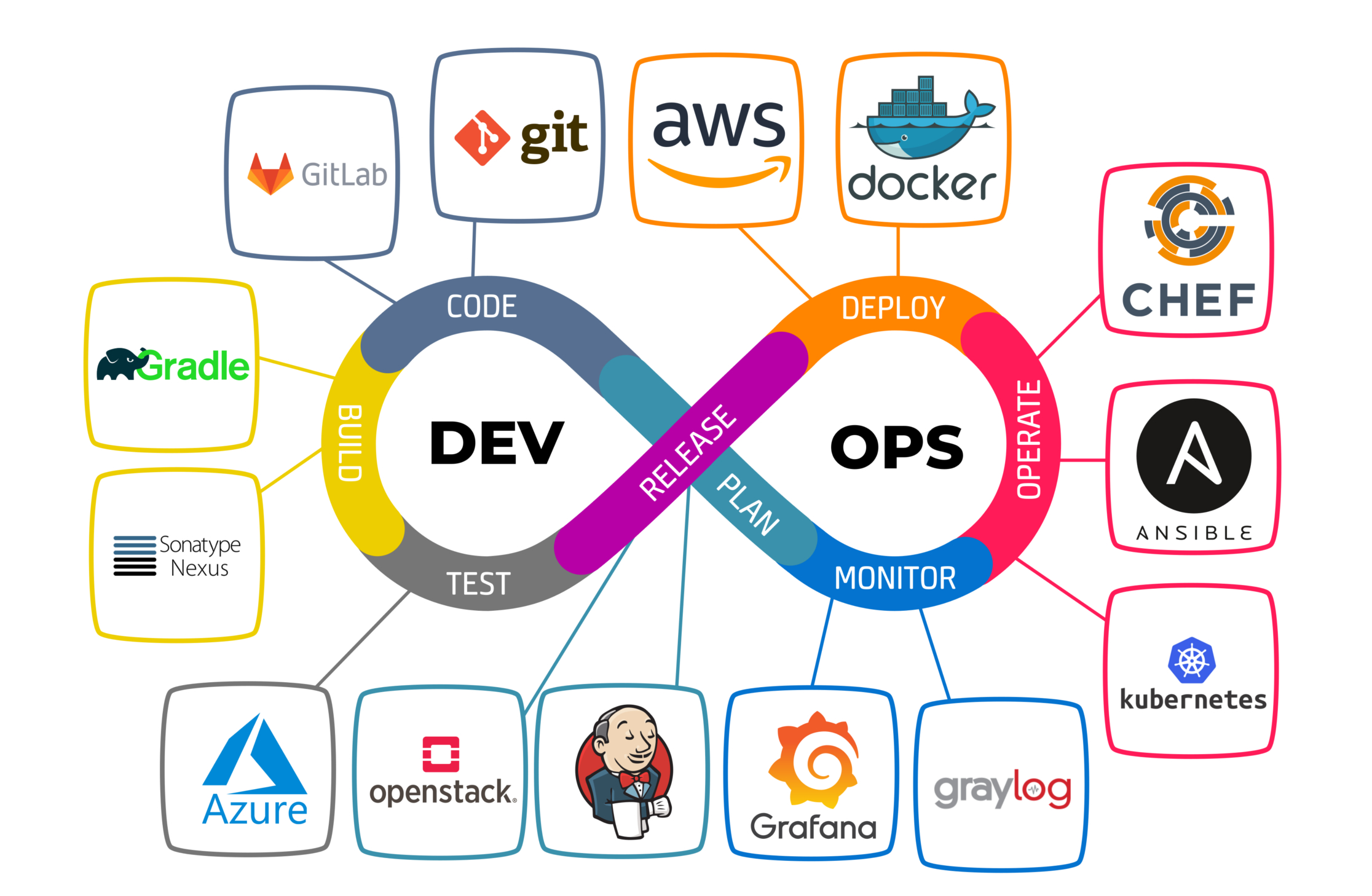
What is Dev-Ops?

Software development comprises of two teams - the development team for designing & building software and the operations team for testing the same. The Ops team gives feedback on bugs and the Dev teams corrects those bugs. While the Ops team is looking for bugs the Dev. team is idle. This delayed the entire software dev. cycle. 

What if the two teams came together and worked on a continuous cycle of improving efficiency and constant activity. The results is faster updates and consistent developments which is termed as called Dev-Ops. 

There are phases to this approach which both teams follow with respective tools and technologies for each phase (See below) 

What Is DevOps? Complete Guide to Best Practices - Orange Matter

Image source: https://orangematter.solarwinds.com/2022/03/21/what-is-devops/

What is DevOps and where is it applied? | SHALB

Image source: https://shalb.com/blog/what-is-devops-and-where-is-it-applied/

Many large & modern companies like Netflix, Amazon and Walmart have opted for Dev-Ops. 


Wednesday, September 7, 2022

Breaking ServiceNow

ServiceNow 


ServiceNow is a cloud-based workflow automation platform for enterprise organisations. 

At a very simple level, think of it as a tool that allows you to raise and track tickets, as well as process and catalogue regular IT service requests. 


Image source & to learn more visit - https://www.youtube.com/watch?v=RNNu-OcWaIY&t=227s 


Components:

  • ITSM: Incident management for IT requests 
  • ITOM: Ops like server, applications load allocation, bandwidth. Alerts of potential issues. Root cause analysis. Capacity management and auto scaling. Integrates with ITSM.
  • ITAM: Hardware asset management, Software licences renewal, software asset tracking, 
  • HR service delivery: Engage employees, speed up onboarding
  • Workplace service delivery: Employee resources like seats on demand, furniture phone line relocation, facility repair.
  • Customer service management: Twitter to email grievance by customer, password change via self service, service reps can find resolutions on knowledge base 
  • Performance: CSAT trends 
  • App engine
  • Automation engine: Password change request, leave application request
  • Integration hub: New employee added to LMS system and payroll. Pre-built flows, automatic data exchange. 


Image source & to learn more visit - https://www.youtube.com/watch?v=RNNu-OcWaIY&t=227s 


Imagine your entire work experience, from employee to customer, streamlined into a single, intuitive app. Introducing the future of enterprise workflows: a cloud-based platform that's as easy to use as WeChat.

Monday, August 31, 2020

Breaking Ads Data Hub

What is Ads Data Hub?

The cookie is crumbling.- It's the most talked about topic in the ad-tech industry in 2020.

Advertisers need a way to measure view-through conversions - Ads viewed but not clicked and the user journey from thereon. 

Earlier the browser could be identified using the cookie but post-2021 this capability will be gone. Previously you could upload raw log data for each click, view or event including UserID, from DCM to Google BigQuery. 

Ads data hub solves this by running queries on Campaign manager, website sessions & online purchases from GA, and paid orders from CRM. 

How does it do it? Ads Data Hub links two BigQuery projects — your own and Google’s.


The Google project stores log data from Campaign Manager, Display & Video 360, YouTube, and Google Ads. This information you can’t get elsewhere because of GDPR rules.

The other project stores all your marketing data (online and offline) uploaded to BigQuery from Google Analytics, CRM, or other sources. 

Ads Data Hub as an API allows you to request data from these two projects at the same time without uploading them at the user level.  

The WHY of this Blog.

Demystifying Data: Your Quick Guide to Talking Tech The world of data – analytics, science, and ad-tech – can feel like a foreign languag...